In Motion
Daniel Lynn

A Clean Break
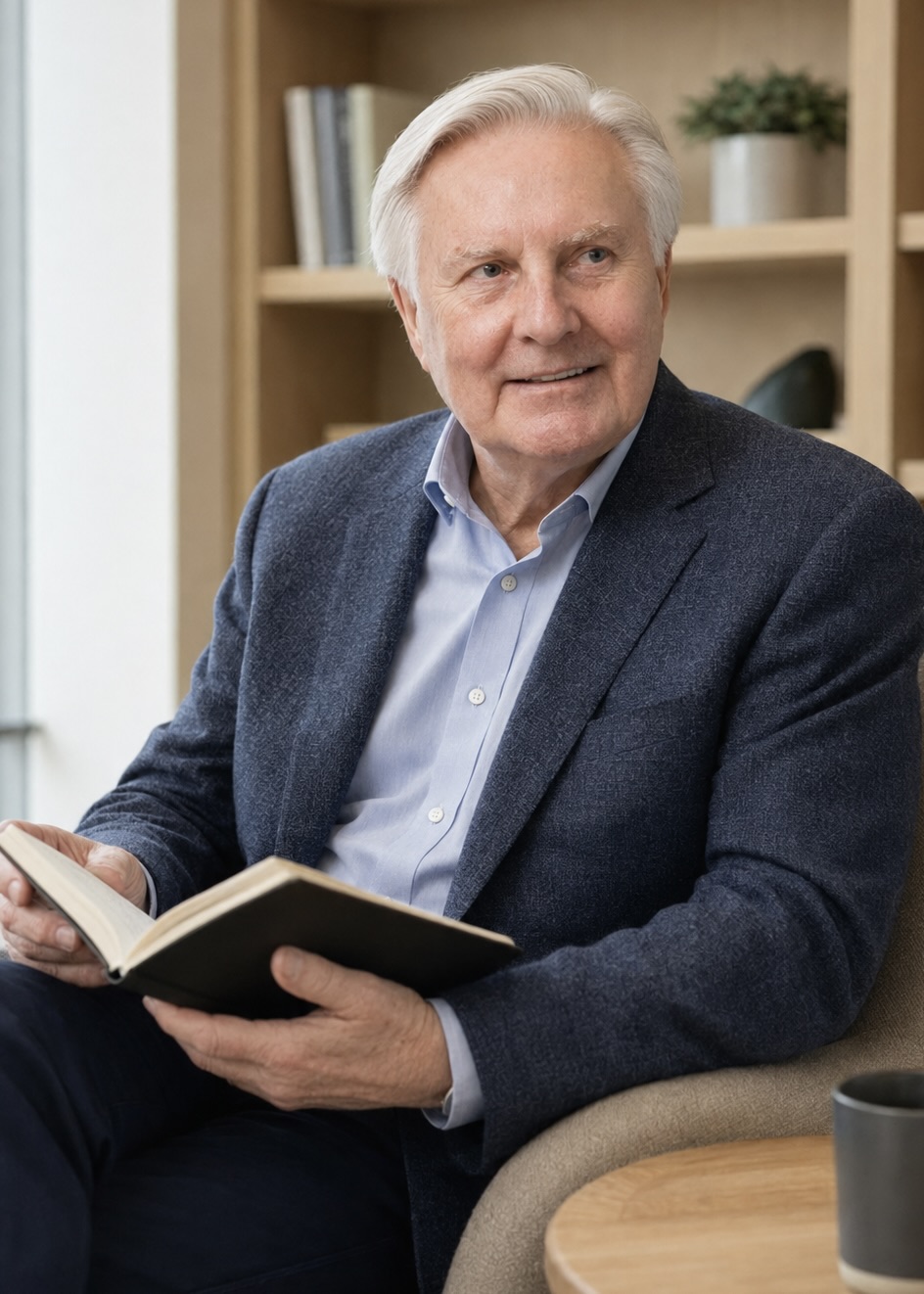
Sanitation technology inventor Daniel Lynn is rethinking how we clean and disinfect the places where we live and work.
11.09.2026
Home: Omaha, NE. Profession: Developing chemical-free sanitation and pathogen-control technologies. Organization: BioSecurity Technology. Title: Founder, CEO and Chief Scientist. Alma mater: University of Tennessee, Knoxville (M.S., Applied Science and Technology).
Current project: Research into biofilm control and removal. Recent recognition: Receiving an international technology award from CBRE. Latest contribution to others: Serving on the board of the Nebraska Association for Food Protection. Biggest leap: Founding BioSecurity Technology in 2019 to bring decades of food safety research into healthcare, schools and other buildings.
Personal mission: Providing chemical-free cleaning and disinfection solutions that streamline workflows for cleaning professionals. Personal motto: Question the conventional way of cleaning.
Why did you found BioSecurity Technology?
To bring decades of food safety, ozone and pathogen-control research out of processing plants and into buildings of every kind: healthcare, educational, manufacturing, commercial, hospitality and public facilities. I founded the company in Omaha in 2019, and we develop the Bio-Safe family of engineered water cleaning and disinfection systems. Our aim is to help organizations control pathogens while relying less on conventional chemical cleaners, particularly in places where cleanliness carries real consequences. Organizations that have used the technology include BMW, General Motors, Whirlpool, Credit Suisse and Fiserv. As founder, CEO and chief scientist, I lead the company’s research, product development and commercialization.
How does the Bio-Safe system work?
It starts with standard cold water. A proprietary engineering process turns that water into an oxidizing cleaner, which breaks back down into oxygen and water after use, leaving no residue on the surface. Rooms can stay in use while it works, with no waiting for fumes to clear. The solution is produced where and when it is needed, so a facility has no conventional cleaning chemicals to store or reorder for that application. It comes in three forms—Bio-Safe Engineered Water, Bio-Safe Gas and Bio-Safe Fogging—delivered through wall-mounted units, mobile carts and systems designed for home kitchens and laundry rooms. The same approach works in a hospital room or on a factory floor.
What do your patents cover?
Ozone cleaning systems, air decontamination and the control of microorganisms. I am the sole inventor named on more than 50 U.S. and international patents related to pathogen control, filed under the name Daniel W. Lynn. Among them are the Reaction Vessel for an Ozone Cleaning System, the Aqueous Ozone Solution for Ozone Cleaning System and the Air Decontamination Unit, along with the Ozonated Liquid Dispensing Unit patent family, which has been filed in several countries. Another covers methods that use an aqueous ozone solution to control microorganisms in retort cooling water. Taken together, the patents are the clearest record of my work.
Where did your work in sanitation begin?
In food processing. At an ozone equipment company, I redesigned its original devices to eliminate cross-contamination. After that, I focused exclusively on food sanitation, from cleaning hard surfaces and reducing pathogen counts to extending food freshness and meeting safety standards. Working with a team of three researchers, I installed more than 200 sanitation systems in seafood, meat and poultry plants, including facilities for Tyson Foods and General Mills. I also traveled to Russia and the Republic of Georgia to help address a major salmonella outbreak. Later, as chief scientist at Pathogenic Control Technologies in Omaha, I led its move into food service, where customers included McDonald’s and IHOP.
What are you researching now?
Biofilm control and removal, which I believe represents the next major advance in sanitation, in homes as well as commercial and industrial buildings. The goal is to make contamination a manageable problem rather than a permanent condition. It is a simple goal, and there is still a long way to go. Alongside that research, BioSecurity Technology continues developing next-generation, chemical-free sanitation technologies for healthcare, food processing, commercial, industrial and residential settings, with a focus on pathogen control and infection prevention.
What do you write and speak about?
Engineered water, antimicrobial technology, food safety and pathogen control, including the role ice plays in foodborne illness. A lot of that work questions the usual assumptions about how buildings get cleaned. I write about chemical residue, cross-contamination and how pathogens can spread through buildings on the people who work in them, often without anyone noticing. I have published three articles in the International Foods Journal, and I present the same subjects through BioSecurity Technology.
How do you stay involved in the wider field?
Through boards, associations and government work. I serve on the board of the Nebraska Association for Food Protection and belong to the International Association for Food Protection, the International Ozone Association and the Society of Gastroenterology Nurses and Associates. I also serve as an expert on agroterrorism and biosecurity for the U.S. Department of Homeland Security. My training supports that role: a diploma in agroterrorism and biosecurity from the University of Tennessee, where I also earned my master’s degree in applied science and technology, as well as FDA certification as a clinical investigator.